Field Notes · 2026-10-31
What Does the CH-47 Chinook Do? A Clear Explainer
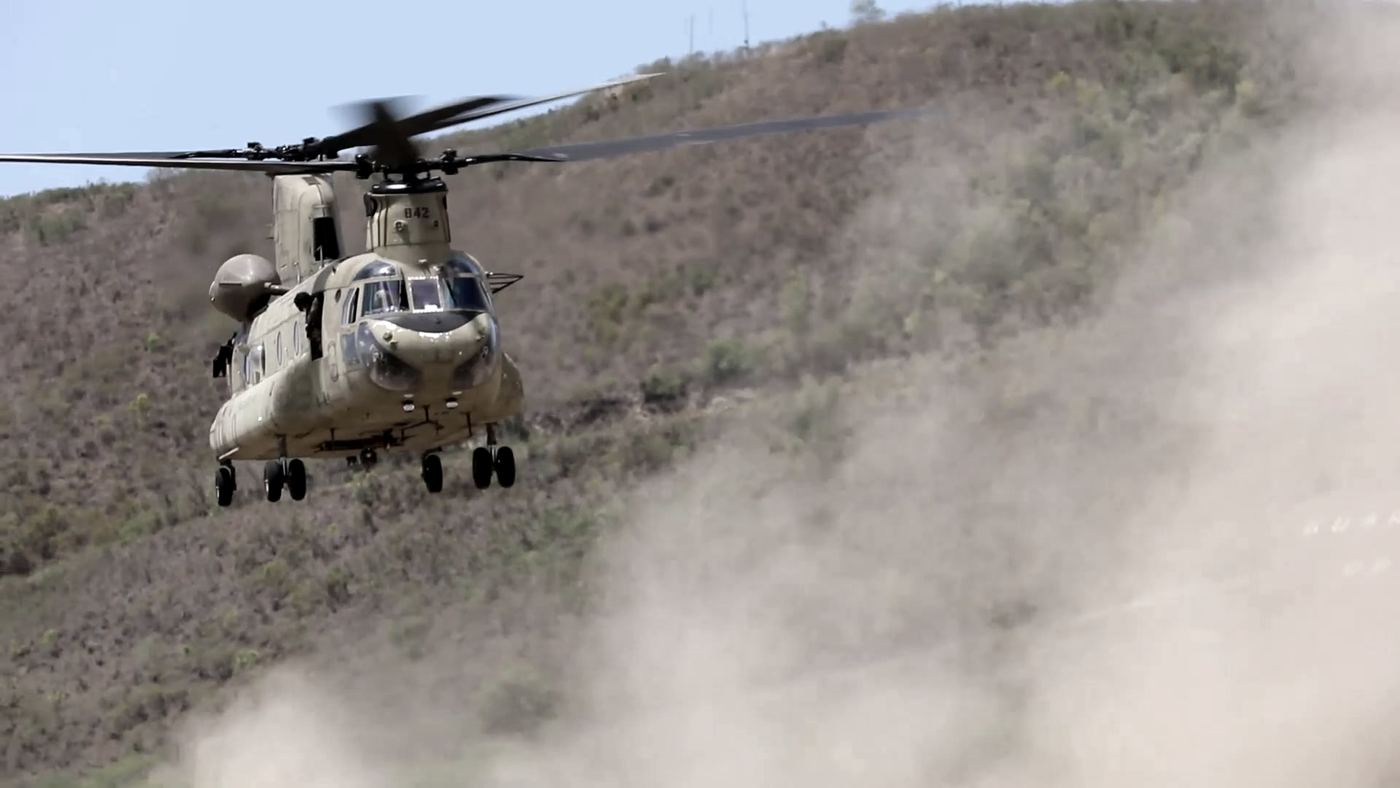
If you've ever heard a deep, rhythmic whop-whop-whop that you feel in your chest before you see anything, it was probably a CH-47 Chinook. With two big rotors and a body like a flying school bus, it's one of the most recognizable aircraft in the world. Here's a plain explainer of what the Chinook actually does, how it works, and why it's still flying more than 60 years after its first flight.
What is the CH-47 Chinook?
The CH-47 Chinook is a twin-engine, tandem-rotor heavy-lift helicopter built by Boeing (its original designer, Vertol, became part of Boeing in 1960). The prototype first flew in 1961, and the Chinook entered U.S. Army service in the early 1960s. The current main Army version is the CH-47F, and special operations units fly the MH-47G. Dozens of countries operate Chinooks, including the United Kingdom, Australia, Canada, the Netherlands, Japan and India.
Like most Army helicopters, it's named after a Native American nation, in this case the Chinook people of the Pacific Northwest.
Why two rotors?
Most helicopters have one main rotor and a small tail rotor. The tail rotor is there to cancel out torque: spin a big rotor one way and the body wants to spin the other way. The Chinook solves that by having two main rotors, one at the front and one at the back, turning in opposite directions. Their torques cancel each other out, so there's no tail rotor.
That design has a few big benefits:
- All the engine power goes into lift. No power is spent on a tail rotor.
- A wide center-of-gravity range. Cargo can be loaded along a long cabin without throwing the aircraft badly out of balance.
- A rear ramp. With no tail boom in the way, the back of the aircraft opens up into a big loading ramp.
The rotors are synchronized through drive shafts so their blades never collide, even though the rotor discs overlap in the middle.
The engines
The Chinook is powered by two Honeywell (originally Lycoming) T55 turboshaft engines mounted on the sides of the rear pylon. Both drive a common transmission system, so if one engine fails, the other can keep both rotors turning. Engine power has grown a lot over the decades, which is a big reason the Chinook keeps getting more capable.
What does the Chinook actually do?
1. Moves troops
The cabin can carry a few dozen fully equipped soldiers. The U.S. Army lists the CH-47F at 33 troops plus three crew. The Chinook is a backbone of air assault operations, where units move by helicopter instead of by road.
2. Hauls cargo inside
The cabin and ramp take pallets, supplies, small vehicles and equipment. Crews can load and unload fast through the ramp, sometimes while the rotors keep turning.
3. Carries heavy loads underneath
This is the Chinook's signature job. The CH-47F has three external cargo hooks under the fuselage. The U.S. Army lists sling-load capacity at 26,000 pounds on the center hook, 17,000 pounds on the forward or aft hook, and 25,000 pounds in tandem. Using hooks in combination helps keep long or awkward loads stable in flight. Typical sling loads include artillery howitzers, Humvees, water bladders, fuel blivets, construction materials and even other damaged aircraft.
4. Flies high and hot
Thin air at altitude and in hot weather robs helicopters of lift. The Chinook's power margin made it especially valuable in mountainous terrain like Afghanistan's, where it could reach high outposts other helicopters struggled with. Its famous partial "pinnacle" landings, with only the rear wheels on a ridge and the ramp down, let troops get on and off where there's no flat ground at all.
5. Disaster relief and firefighting
Chinooks are a common sight after hurricanes, floods and earthquakes, delivering food, water and generators, rescuing people and moving heavy equipment where roads are gone. Military and civilian Chinooks also fight wildfires with large water buckets or internal tanks.
6. Special operations
The MH-47G, flown by the Army's special operations aviation unit, adds aerial refueling, advanced radar and navigation, and extra fuel for long-range missions at night and in bad weather.
Chinook by the numbers (CH-47F)
Exact figures vary by version and source, but these are the U.S. Army's published numbers, with Boeing's figures for dimensions:
- Rotor diameter: 60 feet (each rotor)
- Length with rotors turning: about 99 feet
- Speed: maximum cruise speed of about 160 knots (about 185 mph)
- Engines: two Honeywell T55 turboshafts
- External load: up to about 26,000 lb on the center hook
- Troops: 33 plus three crew
- Max gross weight: 50,000 lb
- Crew: minimum of three (pilot, copilot and flight engineer), usually with one or more crew chiefs
Who flies it?
An Army Chinook crew is normally two pilots, usually warrant officers, plus enlisted crew in the back: a flight engineer and one or more crew chiefs. The back-end crew does far more than ride along. They manage the cabin and the load, watch for obstacles around the long fuselage, talk the pilots over sling loads, and handle the ramp. Many crews will tell you the back is the hardest seat in the aircraft.
Why is it still flying after 60 years?
The basic tandem-rotor layout turned out to be extremely good at heavy lift, so instead of replacing the Chinook the Army kept upgrading it: stronger engines, new rotor blades, digital cockpits, and rebuilt airframes. The CH-47F Block II upgrade is the latest step, with improvements aimed at lifting more weight. Chinooks are expected to stay in service for decades, which could make them among the longest-serving aircraft in U.S. military history.
The sound
That chest-thumping "whop" comes from big, slow rotor blades and two rotors working together. Veterans often say they can recognize a Chinook by sound alone from miles away, and for a lot of people who've served, that sound means a ride home.
Follow along
More on helicopter aviation on TikTok @heavyliftaerial and Instagram @heavyliftaerial.
Drop 01
First release inbound. Heavyweight tees, hats and patches built around the Chinook and the rotorcraft world.
See the shop