Field Notes · 2026-10-31
Helicopter Aviation Terms, Explained: From Brownout to Hangar Queen
Helicopter crews use a vocabulary of their own. Some terms are official words that got shortened, some date back to the Vietnam era, and some are just shorthand that stuck. Here's a glossary of common helicopter aviation terms and what each one really means.
Names for the aircraft
"Huey"
The Bell UH-1 Iroquois. The nickname comes from its original designation, HU-1. It's the helicopter most people picture when they think of Vietnam.
"Hawk"
The UH-60 Black Hawk, the Army's utility helicopter since the late 1970s.
"Apache" and "Kiowa"
The AH-64 attack helicopter and the OH-58 Kiowa scout, which the Army retired in the 2010s. The Army names most of its helicopters after Native American nations.
People and jobs
"PC," "PI," and "IP"
Pilot in command (the pilot responsible for the flight), pilot (the other rated pilot), and instructor pilot. You may also hear "AC," for aircraft commander.
"FE" and "Crew chief"
On many military helicopters, flight engineers and crew chiefs are enlisted crew members in the cabin. They watch the aircraft, the load, the passengers, and the ground, and they talk the pilots through tight spots.
"Warrant"
A warrant officer. Most Army pilots are warrant officers, technical specialists who often spend their whole career flying.
"Stick buddy"
A flight school classmate you trained alongside, sharing aircraft and instructors.
Flying words
"Brownout" and "whiteout"
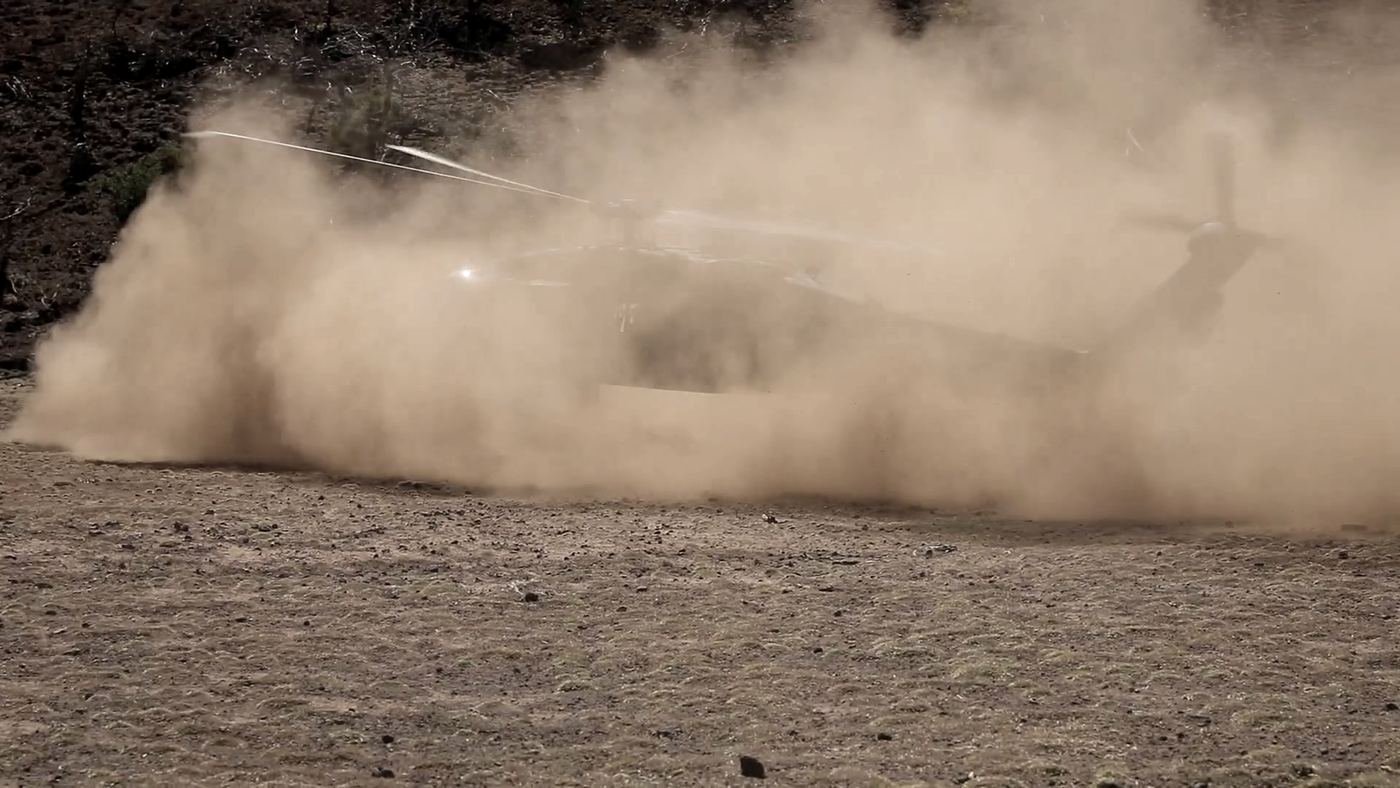
When rotor downwash kicks up so much dust or snow during landing or takeoff that the crew loses sight of the ground. Brownouts are a serious hazard for any helicopter, especially large ones that push a lot of air, and units train hard for them.
"NOE"
Nap-of-the-earth: flying as low as safely possible and following the terrain to avoid being seen.
"Pinnacle"
A landing on a high point like a ridge or mountaintop, where wind and limited space make it tricky. Some helicopters with rear ramps can make partial landings on slopes and ridgelines, touching down with just the rear wheels while the ramp is down.
"Hot" (hot LZ, hot refuel)
A hot LZ is a landing zone under enemy fire. A hot refuel means refueling with the engines and rotors still turning, often at a FARP (forward arming and refueling point).
"Sling load"
Cargo hung from the aircraft's cargo hooks instead of carried inside. Helicopters carry everything from vehicles and construction materials to water buckets for firefighting this way.
Paperwork and maintenance
"The dash-ten"
The aircraft's operator's manual, named for the "-10" at the end of its technical manual number. Pilots study it constantly.
"Hangar queen"
An aircraft that spends more time in maintenance than flying, sometimes cannibalized for parts.
"FOD"
Foreign object debris (or damage): anything loose that can get sucked into an engine or blown into a rotor. A "FOD walk" is a line sweep of the flight line to pick up loose debris.
"Ash and trash"
Routine logistics missions: moving people, mail, supplies and odds and ends.
On the ground
"Nine-line"
The standard nine-line format for requesting a medical evacuation (MEDEVAC). It covers location, frequency, number of patients, equipment needed and more.
Why the vocabulary sticks
Aviation shorthand does the same job as radio phraseology: it packs a lot of meaning into a few words, which matters in a loud aircraft with a busy crew.
Follow along
More on helicopter aviation on TikTok and Instagram at @heavyliftaerial.
Drop 01
First release inbound. Heavyweight tees, hats and patches built around the Chinook and the rotorcraft world.
See the shop