Field Notes · 2026-10-31
Helicopter Radio Calls, Explained: A Glossary
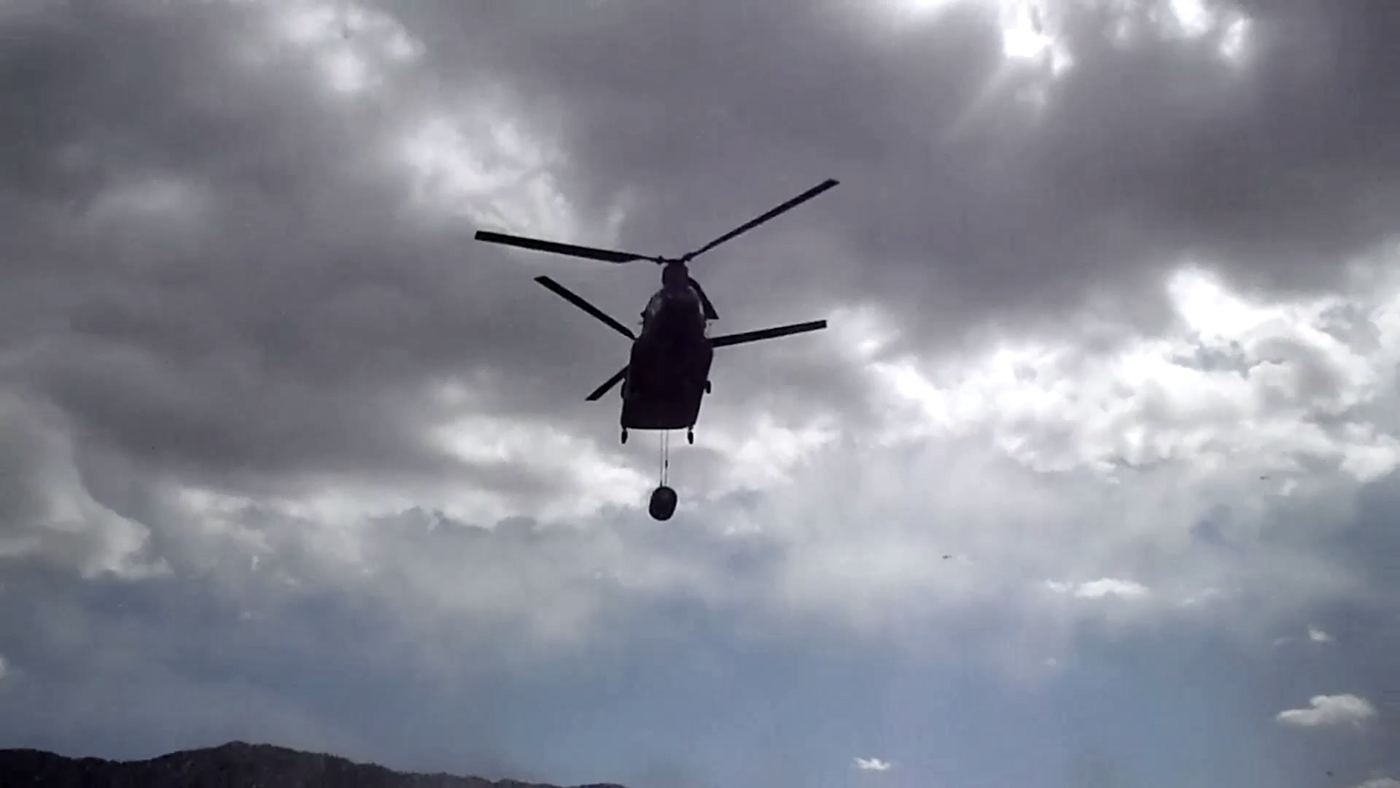
Helicopter radio calls are short on purpose: the frequency is shared, the rotors are loud, and every extra word is one somebody else can't say. Standard phraseology keeps it clear. Here's a glossary of the calls you'll hear around helicopters and what each one means.
Meanings follow standard U.S. aviation and military radio usage (the FAA's Pilot/Controller Glossary and common military practice).
Common cockpit calls
"Short final."
The last part of the approach, lined up and close to touchdown. It's the busiest moment of the flight.
"LZ in sight."
The crew can see the landing zone.
"We're a little heavy."
Gross weight is close to what the aircraft can safely lift in today's temperature, altitude and winds.
"Quick turn."
A fast stop to load or unload, often with the rotors still turning, before going straight back out.
"Little bit of dust on landing."
Rotor downwash is kicking up dust. In a bad case, a brownout, the crew loses sight of the ground.
"Crew chief, how's it look back there?"
A request for the crew in the back to check clearance around the long aircraft and both rotors.
"Nice and smooth on the hookup."
Hovering steadily over a sling load while a ground crew attaches it to the cargo hook, standing right under the rotor wash.
The basics: acknowledging a call
"Roger"
"I have received all of your last transmission." That's it. Roger does not mean yes, and it does not mean "I'll do it."
"Wilco"
Short for "will comply": I received your message, I understand, and I'll do it. Because wilco already includes roger, "Roger, wilco" is redundant (you'll still hear it).
"Affirmative" and "Negative"
Yes and no. They're longer than "yes" and "no" because short words get clipped by squelch and rotor noise, and the longer forms are harder to mistake.
When something didn't come through
"Say again"
Repeat your last transmission.
"Standby"
Wait; I'll get back to you. It is not approval or denial.
Ending a transmission
"Over" vs. "Out"
"Over" means my transmission is done and I expect a reply. "Out" means this conversation is finished and no reply is expected. "Over and out," the movie classic, contradicts itself, and you won't hear it from people who use radios for a living.
"Break" and "Break, break"
"Break" separates parts of a message or messages to different stations. "Break, break" is commonly used to interrupt the net with something more urgent.
Emergencies and fuel
"Mayday"
The international distress call, said three times, for grave and imminent danger needing immediate help. It comes from the French m'aider ("help me").
"Pan-pan"
An urgency call, also said three times: a serious situation that isn't (yet) an immediate threat to the aircraft or people aboard.
"Bingo"
In military aviation, bingo fuel is the pre-planned fuel state at which you must head home or to an alternate. Calling "bingo" means you've reached it.
Inside the aircraft: crew talk
A lot of helicopter crew communication happens on the intercom, not the radio. On larger aircraft, crew chiefs and flight engineers are the pilots' eyes behind and below the aircraft, especially during sling loads and tight landings. In U.S. Army aviation, crew calls are standardized by the Aircrew Training Manual (ATM), so you'll hear calls like these.
"Clear left" / "Clear right" / "Clear aft"
That side of the aircraft is clear of obstacles for the maneuver. On a large helicopter, the tail and rotor tips are a long way from the pilots' view.
"Forward five... three... two... one... steady"
A crew member talking the pilot over a sling load or landing spot, counting down distance until the aircraft is right on top of it.
"Load's off the ground" / "Load released"
Status calls for an external load hanging from the cargo hook.
"Ramp coming up"
The rear cargo ramp is being raised.
Places and positions
"LZ" and "PZ"
Landing zone and pickup zone: where you'll drop troops or cargo, and where you'll pick them up.
"Chalk"
An aircraft's position in a formation or lift (Chalk 1, Chalk 2...), and by extension the group of troops loaded on it.
Why radio lingo matters
Standard phraseology is a safety tool. Precise words cut down on misunderstandings when the frequency is busy, the signal is weak, and the aircraft is loud.
Follow along
More on helicopter aviation on TikTok and Instagram at @heavyliftaerial.
Drop 01
First release inbound. Heavyweight tees, hats and patches built around the Chinook and the rotorcraft world.
See the shop